

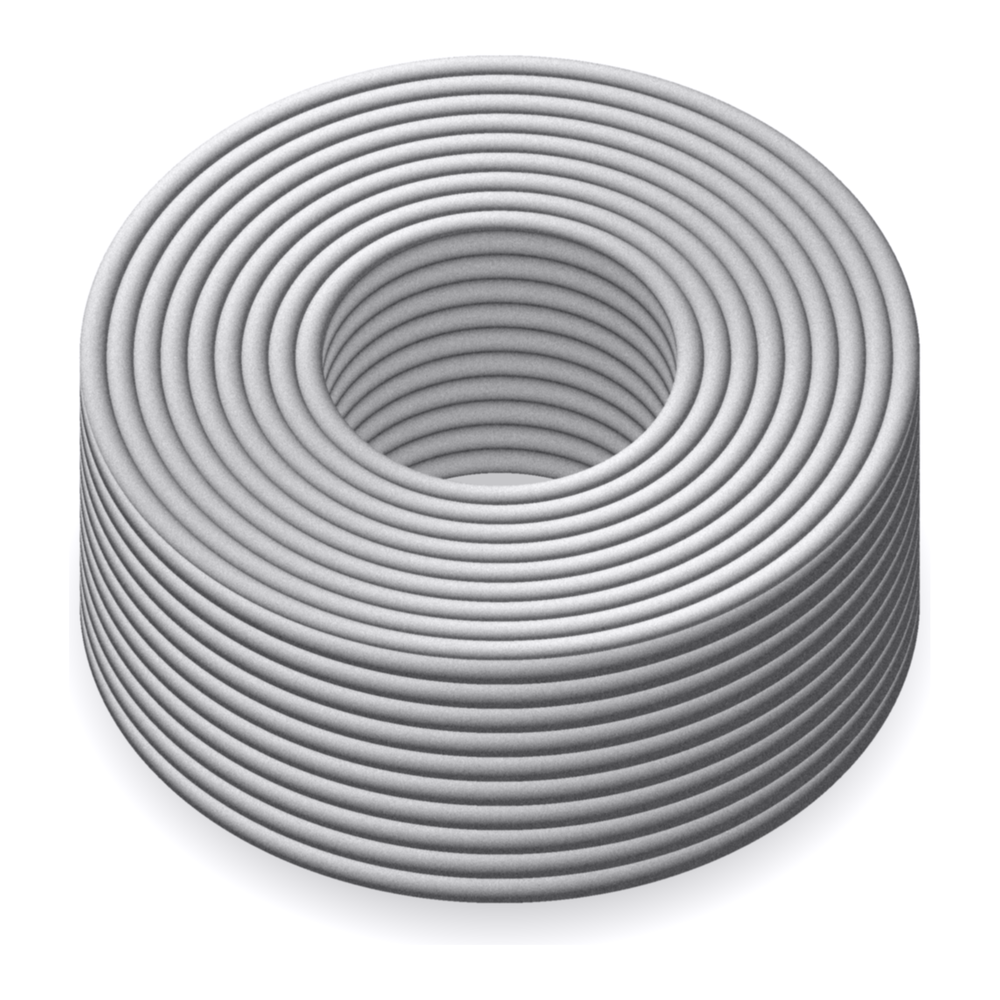
Description
Soft open-cell backer rod is a flexible polyurethane foam joint backing for sealant joints that are irregular or vary in width. It compresses easily to conform to uneven joint profiles, controls sealant depth and acts as a bond breaker so the sealant can move freely with the joint.
Key Features
- Highly compressible – conforms to irregular and variable-width joints
- Breathable open-cell structure lets sealant cure from the back as well as the face
- Can be cut or punctured without outgassing
- Bond breaker prevents three-sided adhesion
- Controls sealant depth and reduces material waste
Typical Applications
- Vertical expansion and control joints in masonry, concrete and precast
- Window, door and cladding perimeter joints
- Above-grade building envelope joints with uneven edges
Sizes & Packaging
| Diameter | Footage per Box | Approx. Joint Width |
|---|---|---|
| 3/8″ | 2,100 ft | 5/16″ |
| 5/8″ (most popular) | 1,550 ft | 1/2″ |
| 7/8″ | 850 ft | 11/16″ |
| 1-1/8″ | 500 ft | 7/8″ |
| 1-1/2″ | 6 ft strips, 66/box (396 ft) | 1-3/16″ |
| 2″ | 228 ft | 1-5/8″ |
Joint widths are approximate, based on the standard practice of sizing backer rod about 25% larger than the joint width. Not recommended for horizontal, below-grade or water-immersed joints, where open-cell foam can absorb water – use closed-cell backer rod instead.
Installation Notes
- Clean and dry the joint before installation.
- Size the rod about 25% larger than the joint so it stays in place under compression.
- Insert with a blunt tool for a consistent depth.
- Set depth to the sealant manufacturer’s recommended width-to-depth ratio (typically about 2:1).
- Do not stretch or twist the rod during installation.
- Follow the sealant manufacturer’s installation guidelines and confirm compatibility.
Sold by the box. Contact us for pricing.
Technical data sheets coming soon.
Technical data sheets coming soon.



Reviews
There are no reviews yet.